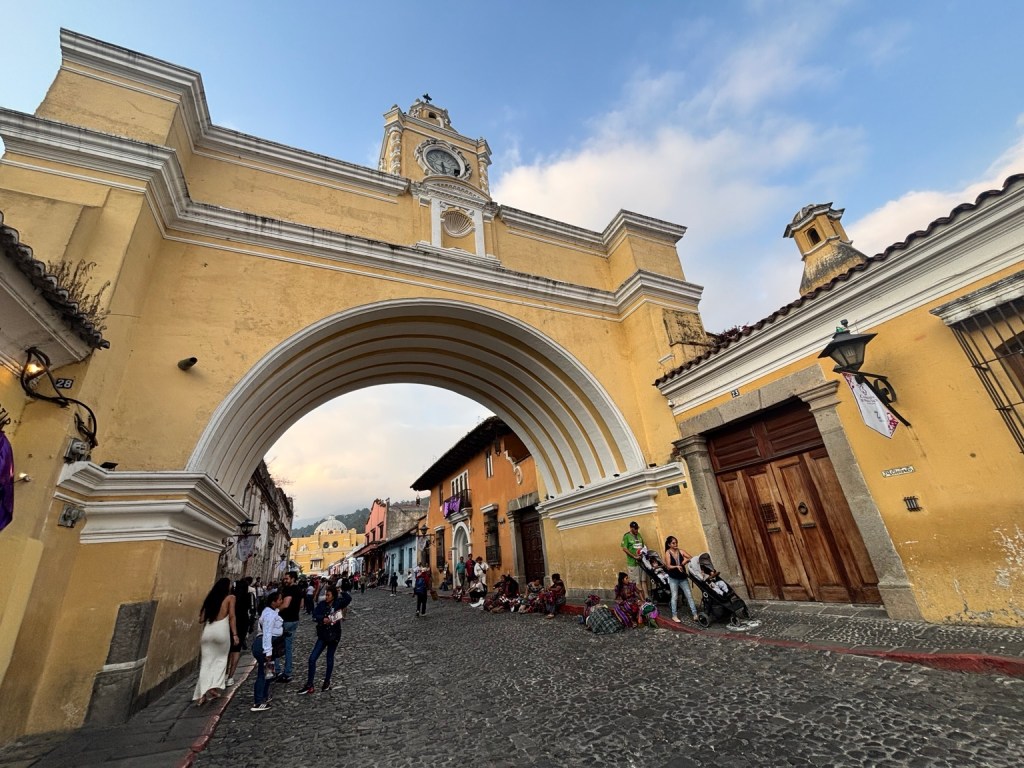
We finally arrived in Antigua, Guatemala, in April 2025, five years after COVID canceled the trip we had originally planned for 2020. The city had been high on my list for ages. I knew to expect colonial buildings, cobblestones and volcano views. What I didn’t know was just how much the timing of our visit would shape the experience.
We were there for three nights, April 5–8, shortly before Easter. Although we’d read about Guatemala’s famous Holy Week traditions, seeing an enormous procession and the intricate street carpets being made and used wasn’t something we’d carefully scheduled. We stumbled into moments that ended up among my favorite memories of the country.
Antigua is a city I would happily revisit. It was beautiful, atmospheric, very walkable and, unlike some of the places we ate later around Lake Atitlán, it delivered some genuinely wonderful food.
Where we stayed: Hotel Genessis
Our base for three nights was Hotel Genessis, in a quieter section of the historic city. We’d originally booked it for our canceled 2020 visit and kept it when we rebuilt the itinerary. We had a junior suite with a garden view and breakfast included.
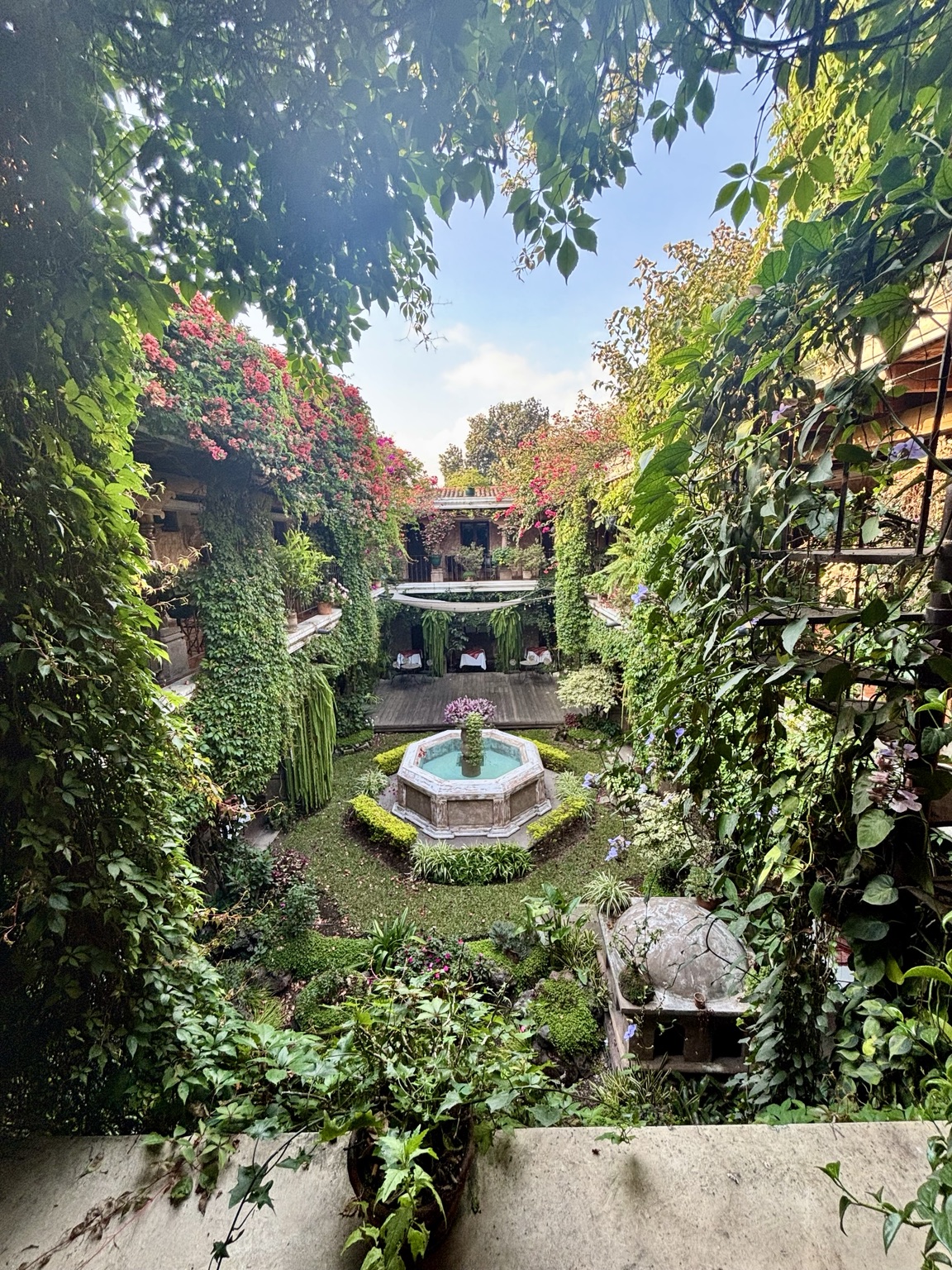
What made the location work for us was being able to spend so much time exploring on foot. The city is full of little discoveries, and we didn’t feel compelled to plan a rigid walking route. Antigua rewards the traveler who occasionally puts away the map and just wanders.
Our first night and an excellent introduction to Guatemalan food
We ate our first dinner at La Fonda de la Calle Real, and it was an excellent start. The food was delicious, and an especially lovely part of the evening was our conversation with the owner’s wife. She helped us choose some dishes beyond the obvious menu choices and explained how to make the most of the processions taking place around town.
That personal kindness set the tone for Antigua. It wasn’t simply that we ate well; it was that the city already felt welcoming and full of things we could discover by following local advice.
The most memorable surprise: Semana Santa in Antigua
Antigua is famous for the traditions leading up to Easter. Neighbors and families create elaborate alfombras—temporary carpets made from dyed sawdust, flowers and other materials—along the routes of religious processions. We had seen photographs before, but seeing the actual work laid across the streets was something else entirely.
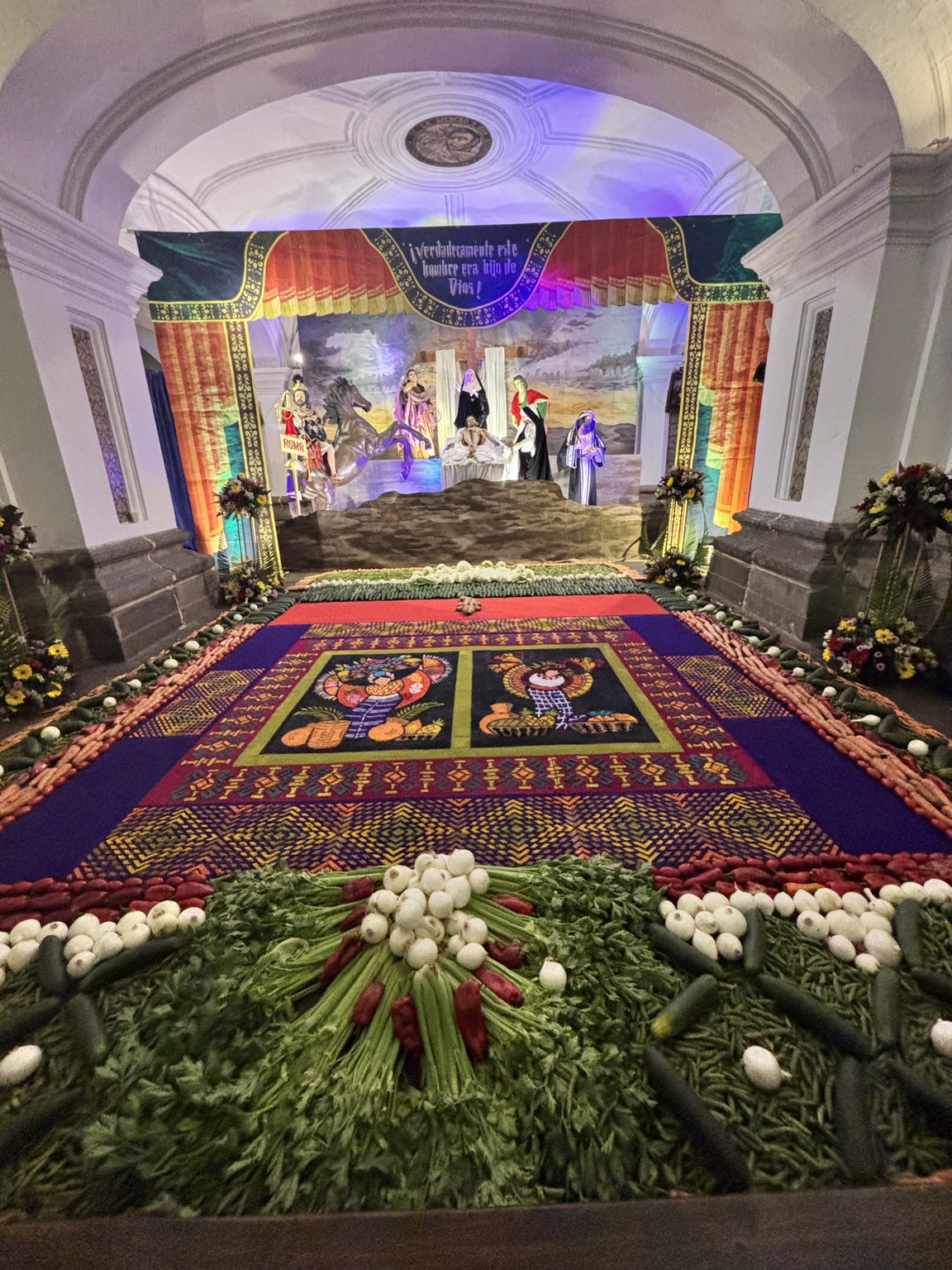
The designs ranged from bold geometric patterns to incredibly detailed images. And unlike a permanent piece of art, the entire point is that the processions pass over them. There’s something very moving about all that painstaking effort going into something so fleeting.
We also saw a huge procession on April 6. It was an extraordinary experience to be in town for, especially because the religious significance and community participation were so evident. Even as visitors, we could sense that this was much more than an elaborate tourist event.
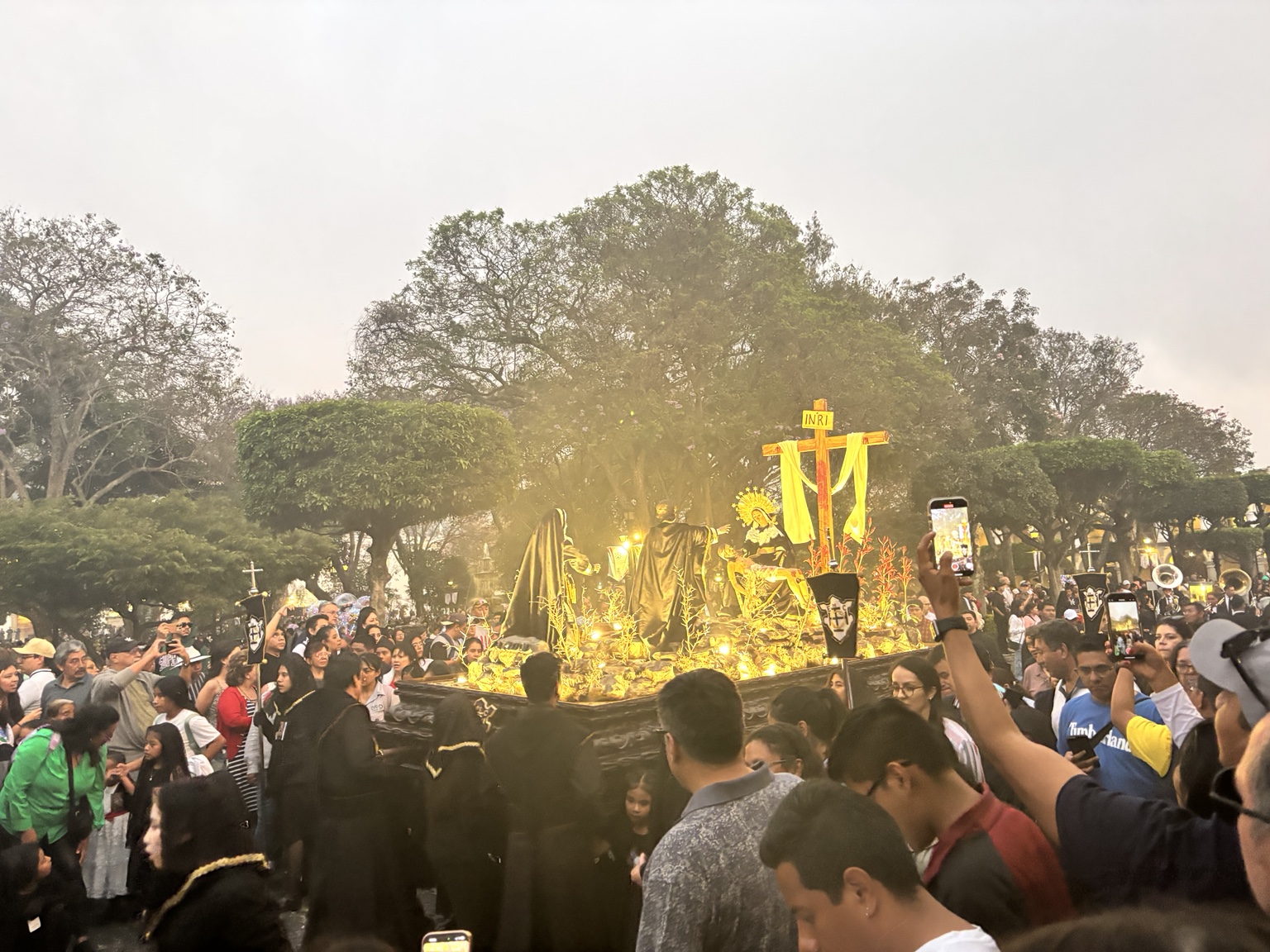
My advice is to give yourself time and be respectful. Streets can be temporarily blocked, crowds gather, and the ceremony is first and foremost meaningful to the people participating in it. We found that wandering with patience, rather than sticking to a minute-by-minute schedule, was exactly the right approach.
Horseback riding at Pacaya Volcano
That same day, we also did a Pacaya Volcano horseback-riding excursion. We’d booked an experience advertised as a horseback adventure with pizza prepared using volcanic heat. In practice, it was a mix of riding and walking: the horses carried us along part of the route, and then we continued on foot over the rugged, dark volcanic terrain.
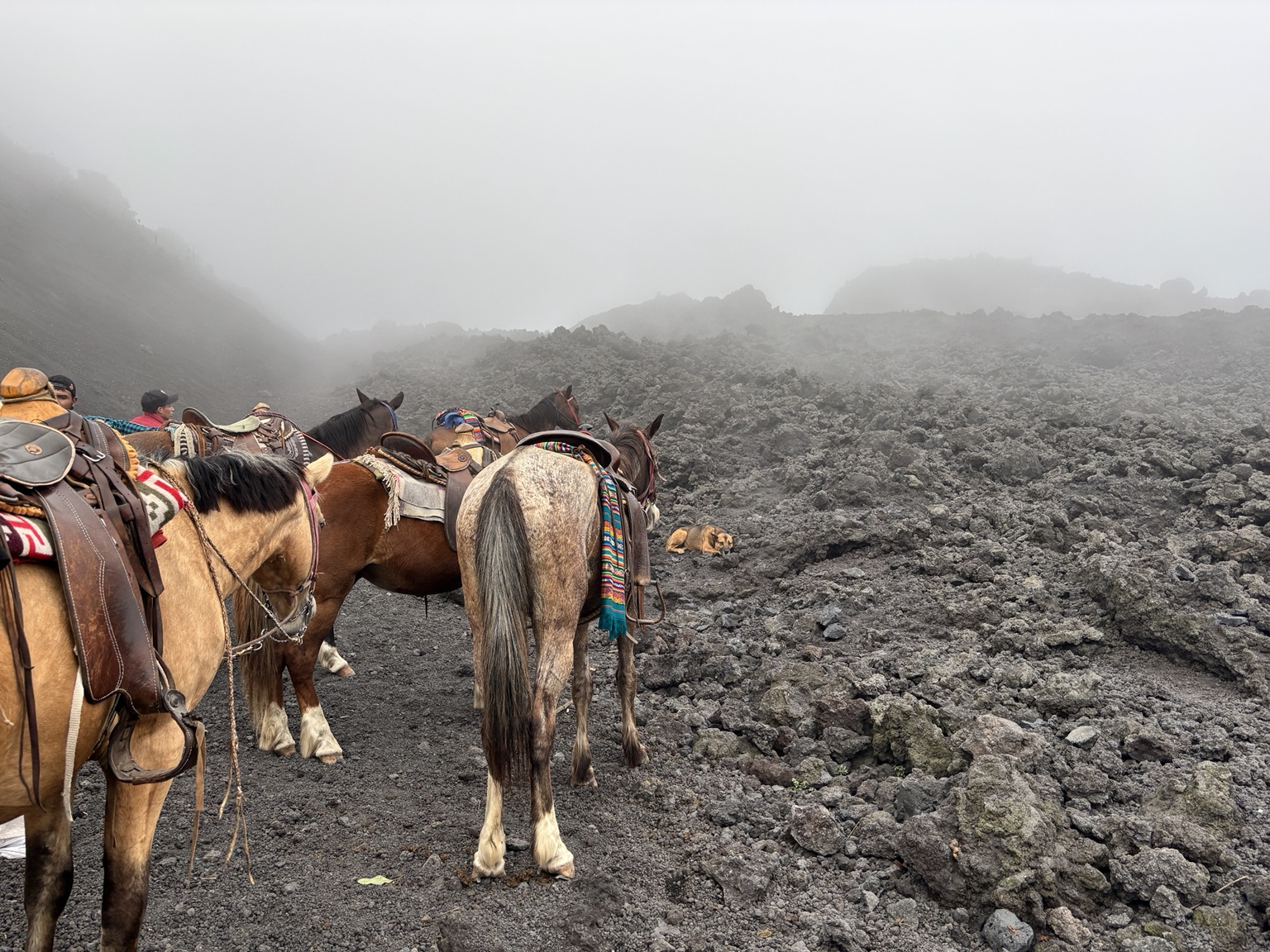
I’m glad to clarify that because ‘horseback tour’ might suggest you stay on a horse throughout the outing. You don’t. The section on foot involved uneven volcanic rock, so footwear and balance matter. We also enjoyed the pizza portion of the experience, but I can’t independently say exactly how it was cooked; the dramatic ‘lava pizza’ description shouldn’t be mistaken for us witnessing flowing lava.
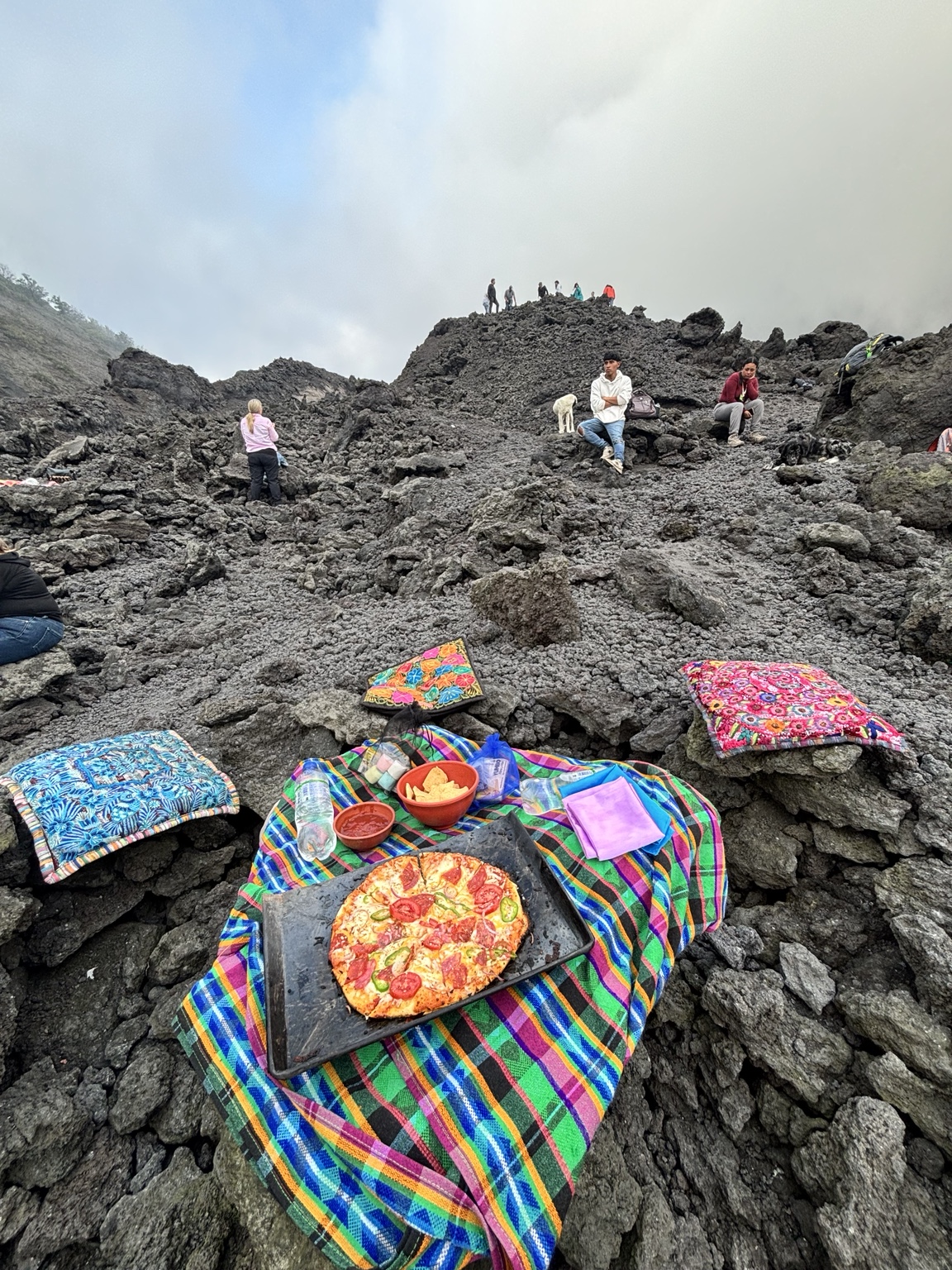
I enjoyed the contrast with Antigua’s pretty streets: one moment you’re among historical buildings and vibrant decorations, and the next you’re standing in a landscape that feels almost otherworldly.
Cerro de la Cruz, convent ruins and the pleasures of wandering
For our next day, we decided to take a tuk-tuk up to Cerro de la Cruz. This worked beautifully. We got the elevated perspective without spending the first part of the outing climbing uphill, then took our time walking back down into the city.
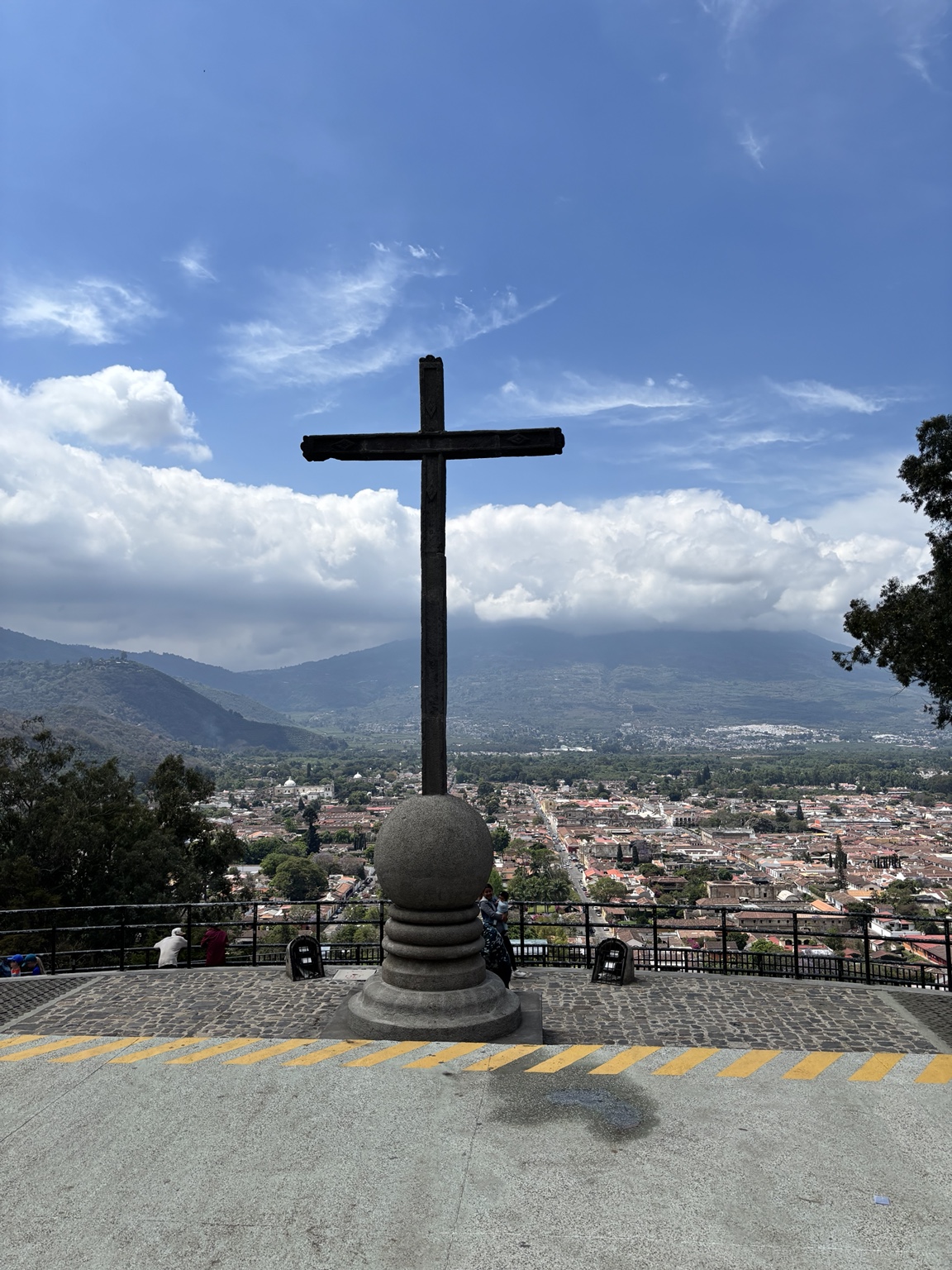
The cross and the sweep of rooftops against the mountains are lovely, but for me the best part of the outing was that it fed naturally into more wandering. We stopped at Convento de las Capuchinas, where I especially liked the atmospheric courtyard and old stone architecture.
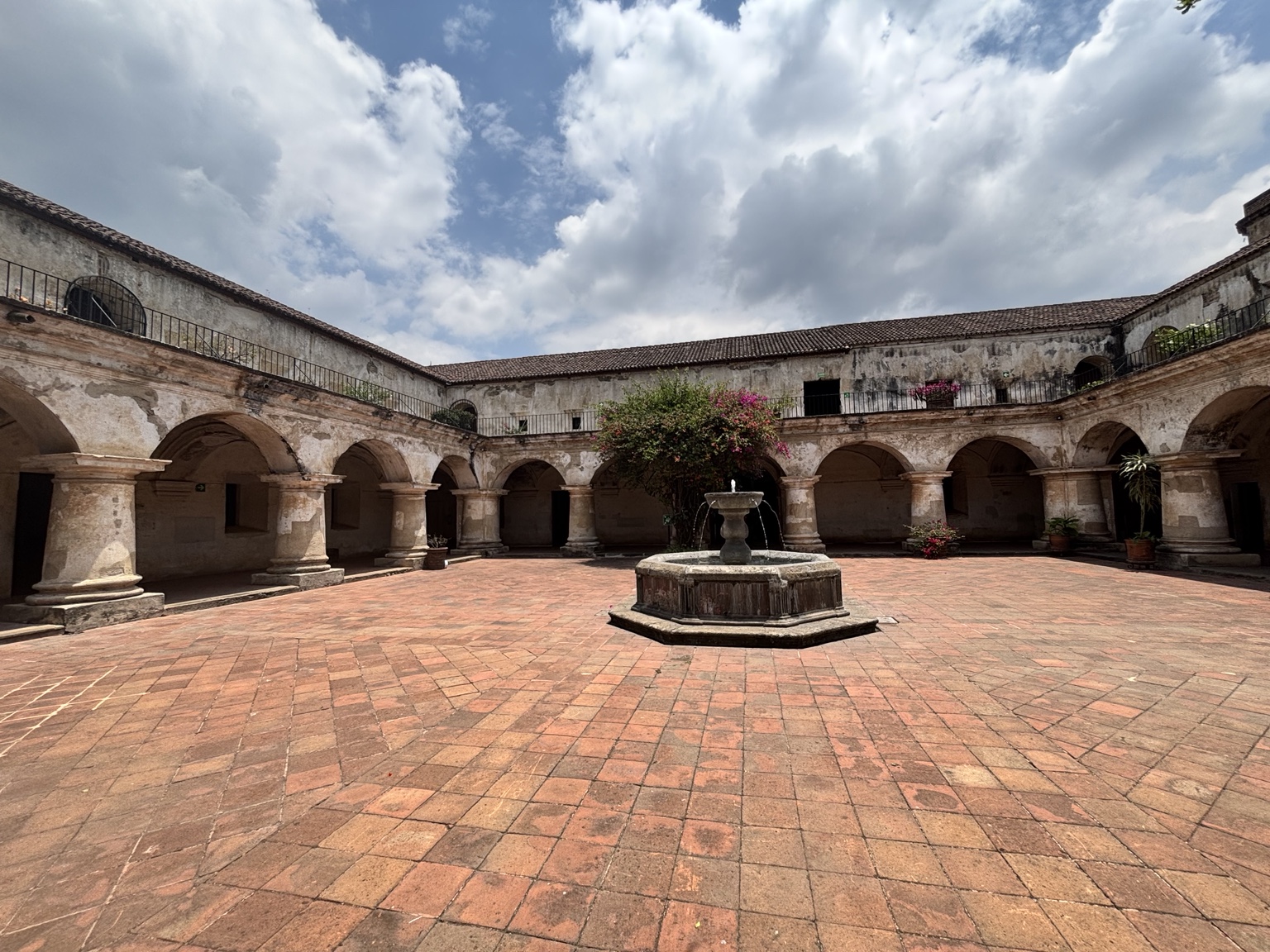
We also admired Santa Clara from outside, rather than touring its interior. There are so many evocative ruins and churches in Antigua that I wouldn’t recommend treating them as a checklist. Choose a few that appeal to you and give yourself time to absorb the atmosphere.
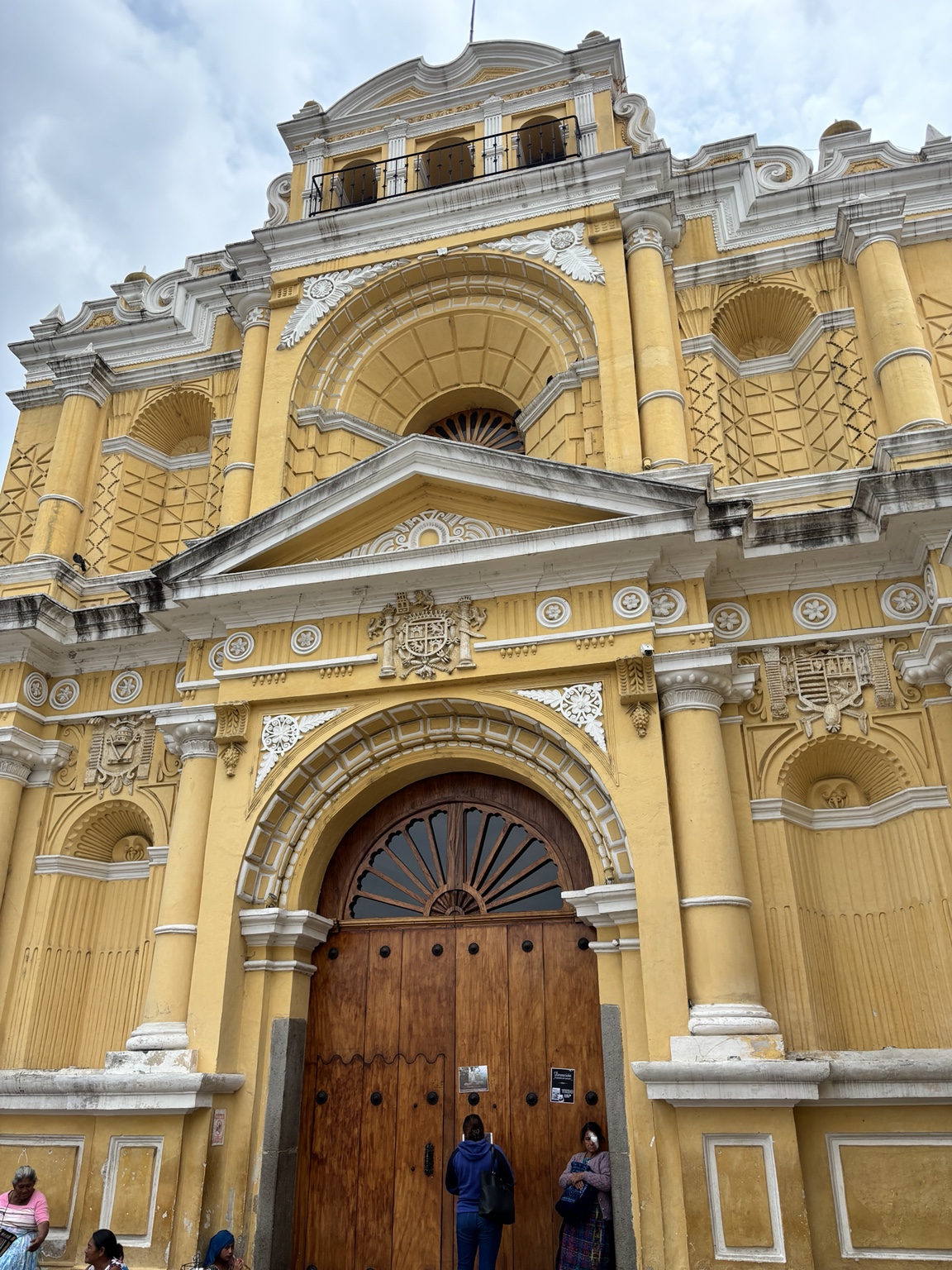
Where we ate and drank in Antigua
La Fonda de la Calle Real: our standout traditional meal
Our first-night dinner deserves a second mention: the traditional Guatemalan cooking was excellent, and the friendly help with ordering made it even better. If you enjoy discovering local food traditions, I’d make this a priority.
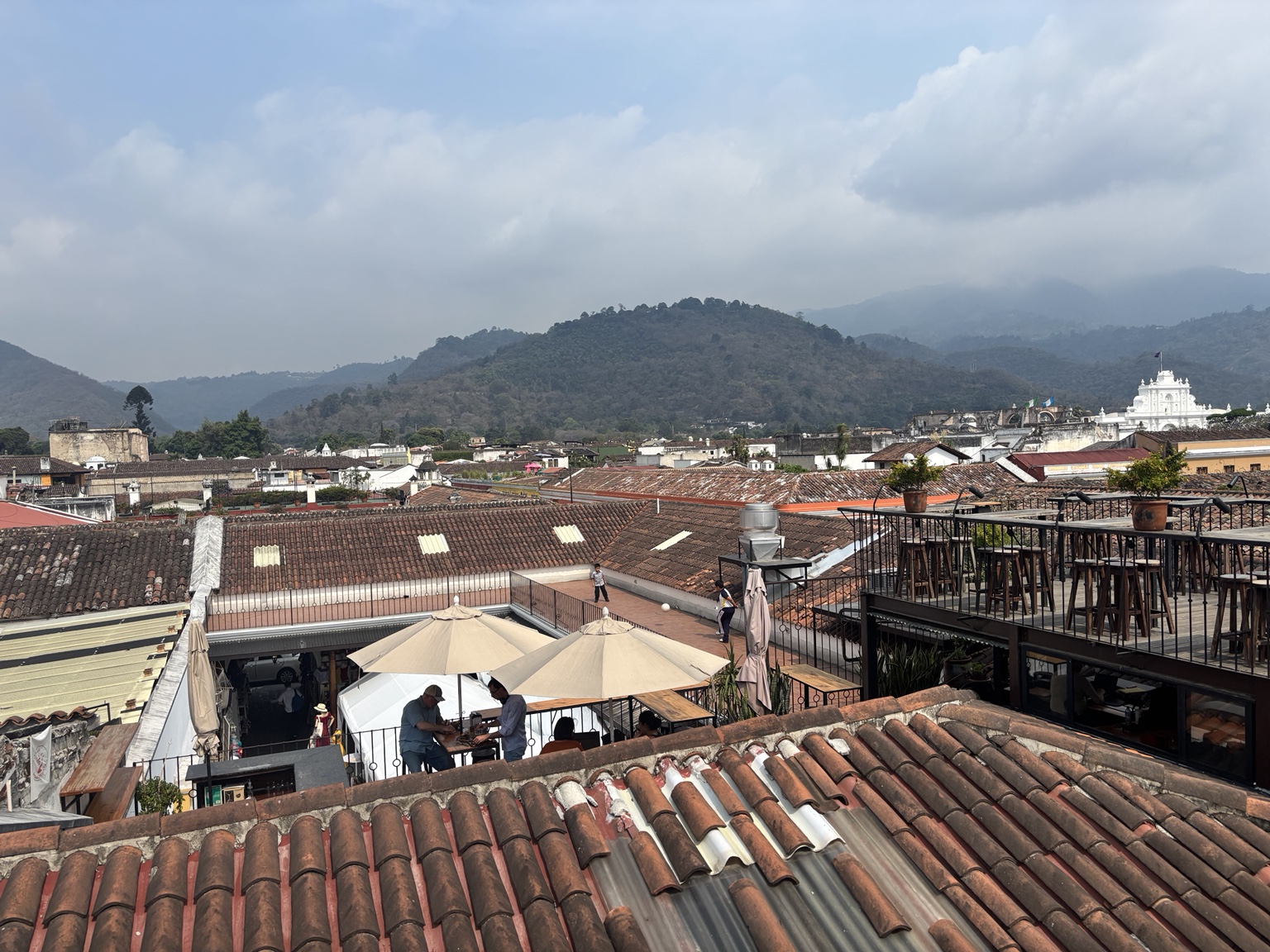
Antigua Brewing: a rooftop worth lingering over
We thoroughly enjoyed our rooftop stop at Antigua Brewing. It was one of those places where the setting becomes part of the experience. I loved the opportunity to sit above the streets and take in the atmosphere from a different vantage point.
Por Qué No?: tiny, quirky and a little precarious
Our dinner at Por Qué No? was memorable for completely different reasons. The restaurant is tiny and has the kind of idiosyncratic, expat-y personality that makes you feel as though you’ve stumbled onto somewhere unusual. We had good food, beautifully presented, and a genuinely fun evening.
There is one important detail I’d want any reader to know: we reached our table via very steep stairs with a rope serving as a sort of banister. At first I described it as a ladder, but that’s not quite right. The stairs were definitely steep enough to feel precarious. If you have mobility or balance concerns, this might not be an appropriate place for you.
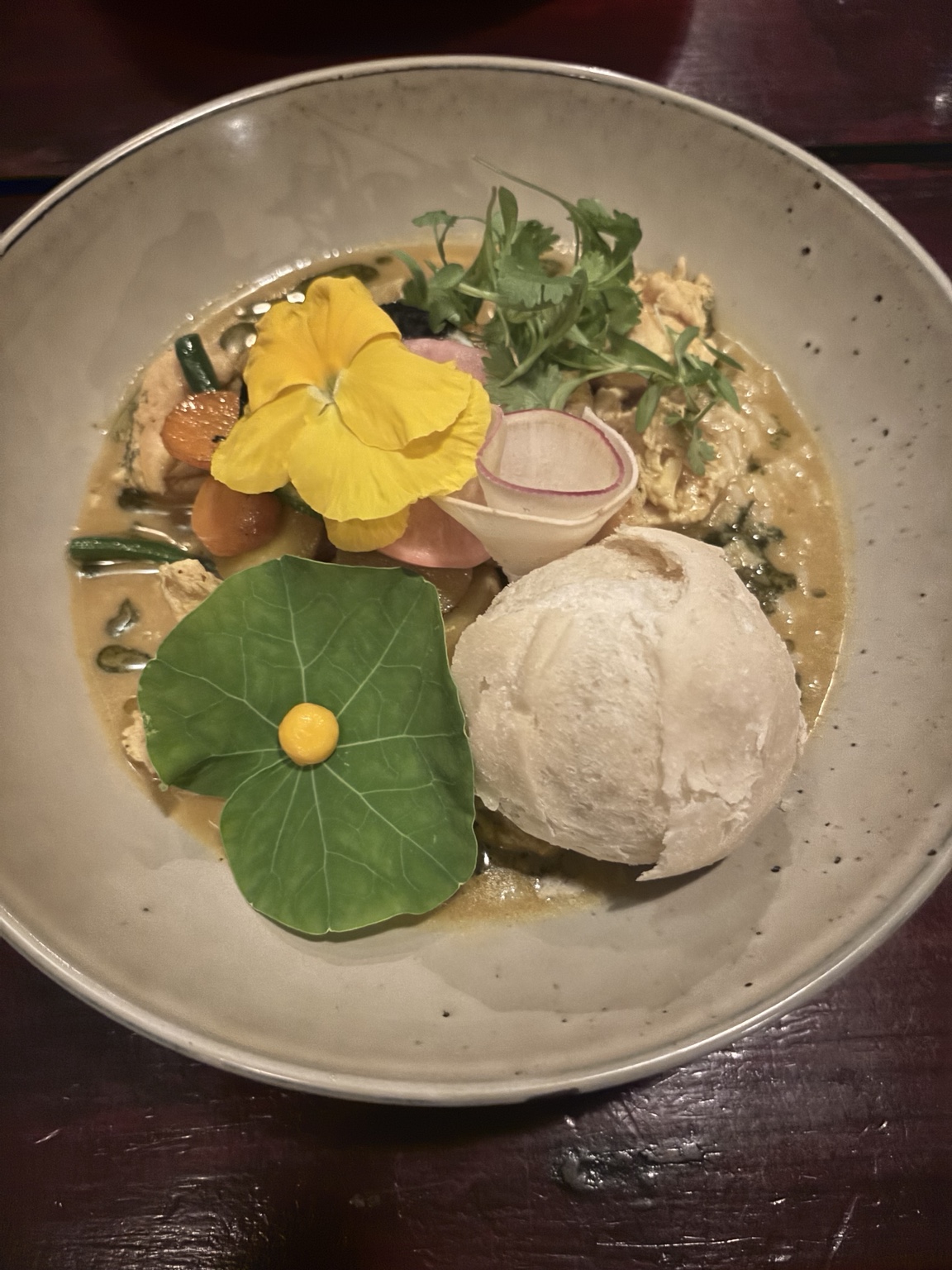
That mix of good food, unusual setting and practical realities is what I want from an honest travel recommendation. I loved it, but I wouldn’t send someone there without warning them about the access.
The Antigua experiences we didn’t do
We had considered Finca La Azotea, the coffee plantation, and Caoba Farms, but neither made it into this actual trip. Mentioning that matters because Guatemala itineraries online often list so many excellent options that it’s hard to distinguish what someone really visited from what was simply on their planning spreadsheet.
For us, the processions, Pacaya, the viewpoint, a few ruins and a lot of wandering filled our three nights beautifully.
Practical tips after our three nights
Consider a tuk-tuk uphill and walk downhill. That’s exactly what we did for Cerro de la Cruz, and it left us more energy for the city.
Don’t underestimate uneven ground. Antigua’s cobblestones are part of the appeal, while Pacaya has its own rugged volcanic terrain. Comfortable, stable shoes are a must.
Leave flexibility if you visit near Easter. The carpets and religious processions were the most powerful part of our experience, but the route and crowd conditions can dictate your day. Approach these traditions with curiosity and respect.
Choose restaurants for both food and experience. La Fonda for wonderful Guatemalan cooking, Antigua Brewing for the rooftop atmosphere and Por Qué No? for a quirky, very small space with a significant stair-access caveat.
Our verdict on Antigua
Antigua managed to deliver the combination I love most: beautiful surroundings, excellent food, a sense of history, and enough unexpected moments that it never felt like we were following a generic itinerary. Three nights gave us a rich first taste, but I could happily have stayed longer. When we moved on to Lake Atitlán, we took some very special memories with us—and a strong suspicion that Antigua was going to remain our favorite place in Guatemala to eat.
Planning the whole trip? See our seven-night Guatemala itinerary for how we combined Antigua with four nights at Lake Atitlán.


Leave a Reply